
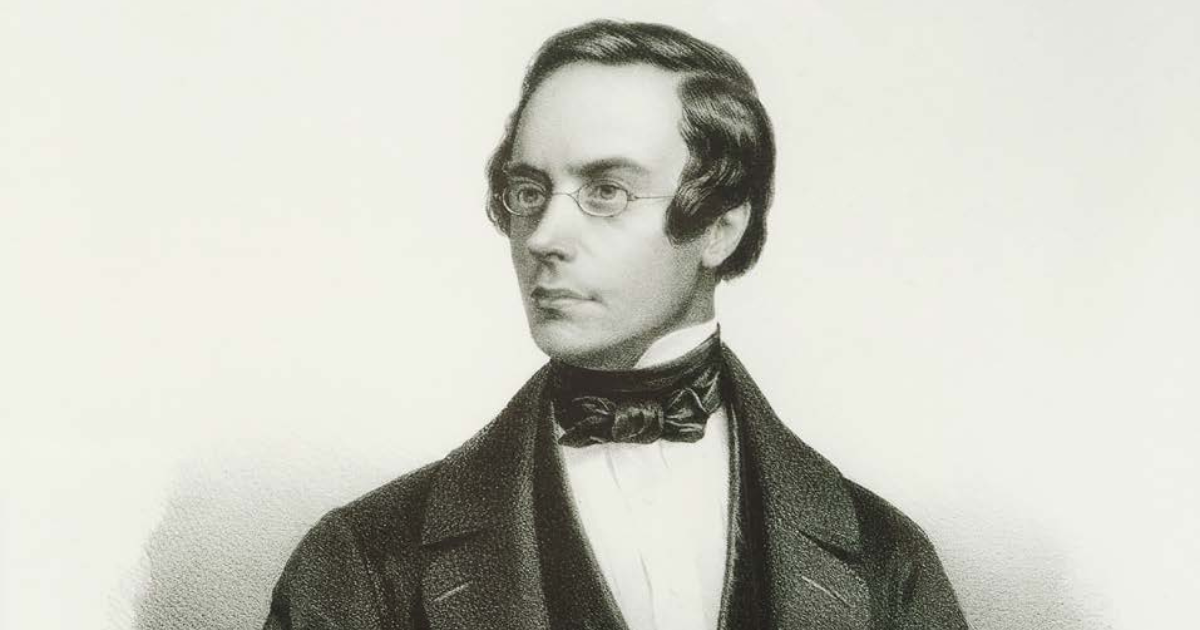
Picture courtesy of the Parish of St. Helier.
16 January 2026
You’ve probably walked past or stopped by the fountain-like structure on Broad Street a few times, or even used it as a meeting place for friends and family - but do you know why it’s there?
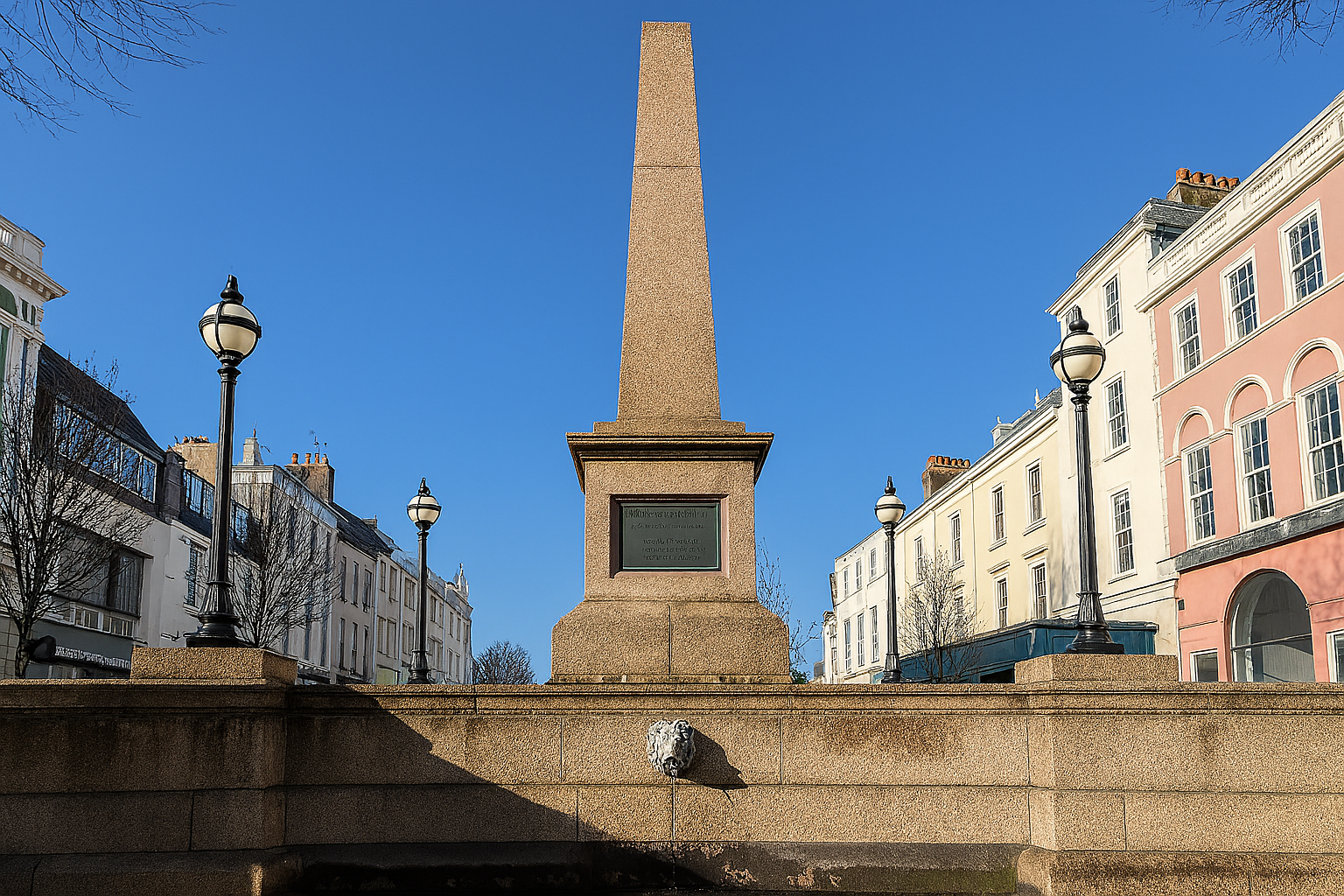
The Le Sueur Obelisk was built in honour of the States Member who, in the mid-19th century, helped develop the Town’s sewage network.
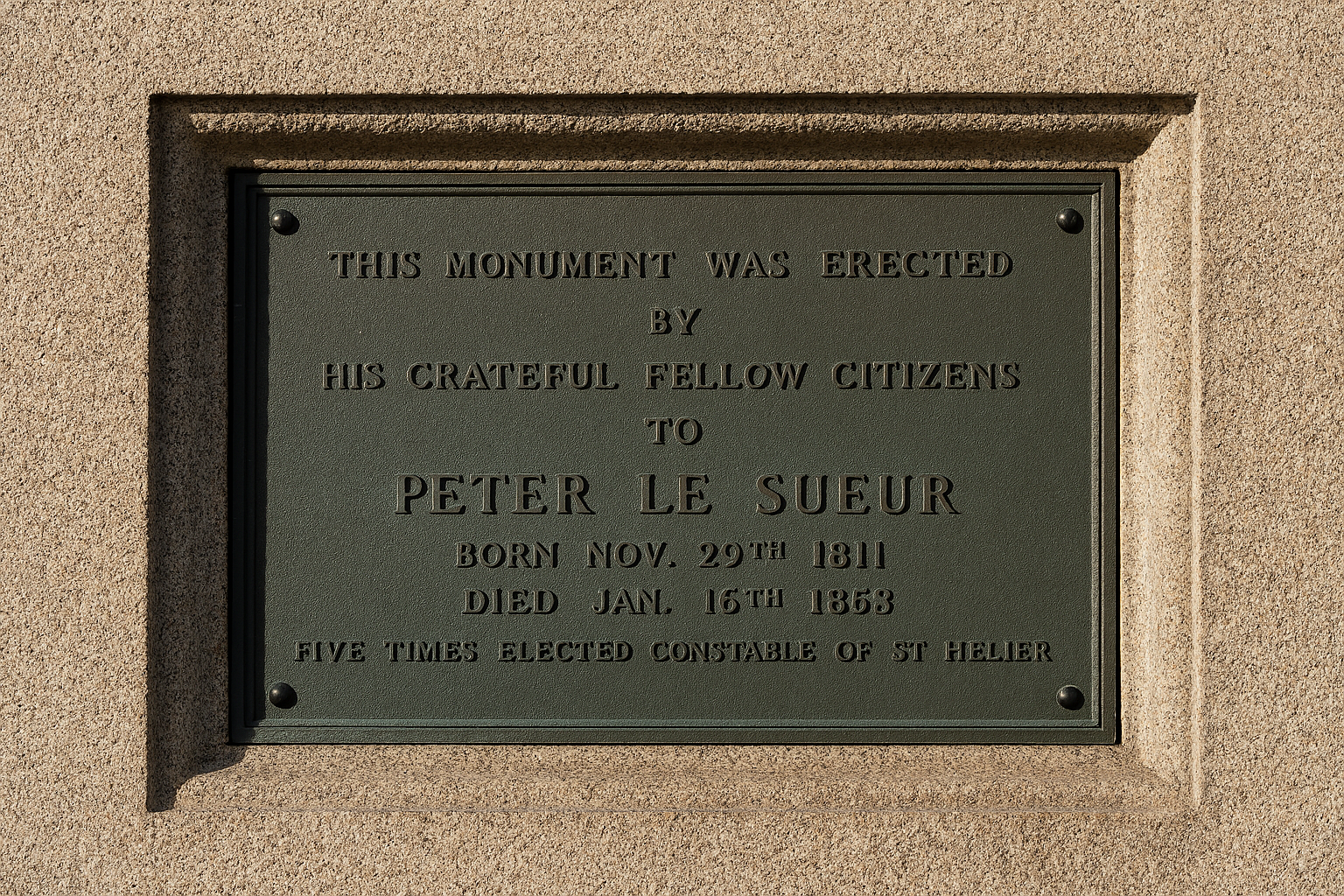
His name was Pierre Le Sueur, and he was the Constable of St. Helier from 1839 until his death on 16 January 1853.
St. Helier in the 19th century
Born in 1811, Pierre Le Sueur was the son of a blacksmith. From an early age, he showed a flair for the law. After studying in Paris, he was sworn in and began practising in Jersey 1837.
His political career began shortly afterwards when, in 1839 at the age of 28, he was elected Constable of St. Helier for the first time. He would go on to serve a total of five terms in office.
It was around this time that Jersey’s population began to boom, driven largely by the growth in cod fishing and the maritime trade, as well as immigration. Figures from censuses suggest that by 1851 just over 57,000 people called the Island home, compared to 28,600 two decades earlier. Many of these new arrivals settled in St. Helier, increasing the demand for housing and putting extra strain on the Town’s infrastructure, including the sewage network which at that time consisted mainly of open channels. These poor sanitation conditions resulted in outbreaks of cholera, the worst of which in 1832 caused 347 deaths in just 12 weeks.
By the mid 1840’s, it had become obvious to Le Sueur that something needed to be done to improve conditions for those living in the Parish, and records show debates were held in the Assembly around the need for a proper sewage system. A Committee was formed to look into the issue, and in March 1844 a report was presented to the Assembly regarding sewers in Great Union Road, Aquila Road and the surrounding area. It was suggested that the costs for these be split equally between the States, the Parish and homeowners in the neighbourhood.
Despite opposition from the public, the project went ahead, and work began in 1845, with further work approved by the Assembly in 1846. It didn’t take long for the public to realise their mistake and in 1848, his parishioners showed their thanks for his efforts by gifting him silverware work more than £300, which equates to around £45,000 today.
.png "Pierre-Le-Sueur-Monument-(1).png")
The Le Sueur legacy
As well as introducing St. Helier’s sewage network, Le Sueur widened some of the streets in the Parish, introduced the naming and numbering of them, established a fire service and prosecuted landlords whose properties had turned into slums. He was also very active within the States Assembly. He was appointed Treasurer in 1846 and his skill as a lawyer meant that he played a major part in drafting laws.
In 1847, he is reported to have placed himself between an angry mob and the Town Mills during the Bread Riots, which were driven by rising food prices. Recognising that real problems had led to the action, Le Sueur established a relief fund to help those in distress.
Pierre Le Sueur died suddenly in 1853 at the age of 41. While details of the cause remain unclear, it’s thought years of overwork and exhaustion may have played a part.
To honour his achievements, it was decided that a monument would be built outside the house in Broad Street where he was born. Originally, plans were put forward for a fountain with suitable ornaments and inscriptions, but it was deemed too expensive. At a committee meeting in 1854, it was agreed a granite obelisk should be built instead, with the option of turning it into a fountain eventually.
By the end of that year, a design featuring the obelisk and four lion (or leopard) heads we see today had been chosen.
By 1856, work on the structure had been completed, but it would be another 14 years before the pipes needed to bring water to the monument were laid. On a Saturday morning in November 1870, the taps were finally turned on, and water began to flow from the lion heads, completing the vision to honour St. Helier’s sewage pioneer.
.png "Monument-plaque-(1).png")